

Introduction
Project management is crucial to the realization of any endeavour since it facilitates the timely and accurate completion of set goals. One of the most important aspects of project management is Online assignment help UK and ensuring that the expected results are achieved for all stakeholders. This paper will discuss the significance of user expectations for project management and many important ways to achieve this objective.
The Importance of Knowing What Users Want
Conducting an in-depth gathering of requirements is a crucial step toward achieving consumer expectations. Stakeholders are consulted as part of this procedure to ascertain their requirements. Interviews, questionnaires, and workshops may all be used to learn more about what the participants really want to achieve (Moradi et al., 2020). Project managers will know their work will meet users’ expectations if they meticulously record them.
Having a shared objective helps provide direction to the work that everyone does. In a nutshell, people are in need of direction and directional leadership. This also holds true for web-based endeavours. Customers want to comprehend why they have to invest in learning about something new or pointing out issues. They want to know why certain functionalities were left out of the package. If the team loses sight of the big picture, they risk losing motivation and starting to work in ways that are counterproductive to the project’s overall objective. This results in a waste of time, energy, and resources that might have been put to better use.
Understanding and meeting user expectations requires strong lines of interaction. Project managers can more effectively address stakeholder input and concerns if they have established clear channels of contact with those affected by the project (Karlsen and Berg, 2020). During the project’s lifespan, stakeholders’ expectations may be addressed by keeping them apprised of developments and offering feedback in the form of periodic communications and progress reports.
By identifying important stakeholders including their effect on the project, stakeholder assessment methodologies help in establishing user expectations. Project managers may successfully engage with and handle stakeholders by first analysing their desires, interests, and possible conflicts. Once they have this knowledge, they can better satisfy project stakeholders by delivering results that meet their needs.
At first, online assignment help and the goal behind the documentation endeavour was undoubtedly good. It is often accepted that a well-implemented system is the product of meticulous requirements definition throughout the development phase. People will like the method if it’s well-designed.
System design managers understood that there were gaps between what the IT department saw and what the users saw. They reasoned that end customers had no idea of what they intended, what they required, or what to anticipate from the given technologies. As a result, PMs made comprehensive and extensive documentation a top priority. Users, it is reasoned, do not comprehend the systems they design.
Simple voting, the MoSCoW approach, the “minimum viable product (MVP)” vs. “non-MVP exercise”, and so on are just a few of the software needs prioritization strategies available (Nenonen and Storbacka, 2020). Since the outcome of a prioritization exercise will determine what is potentially at risk should conditions change, it’s during this process that the business’s stakeholders are going to have the most difficult conversations.
Understanding the goals and objectives
SMART goals
In project management, essay typer and teams and businesses use projects to make their objectives a reality, SMART goals take on a particularly vital role. Strategic as well as operational responsibilities, such as decomposing broad goals into more manageable chunks, distributing resources between competing demands, and cultivating and maintaining connections with stakeholders at every stage of the company’s pipeline are all typical components of any given project. Project managers are more effective when they use SMART targets to accomplish these aims (Muntean, 2020). Users’ expectations can only be met via the establishment of distinct project goals. In order to guarantee that the objectives are well-defined and achievable, it is recommended that project users use the SMART method (“Specific, Measurable, Achievable, Relevant, Time-bound”). A project’s success depends on well-defined objectives, which serve as a framework for making choices through the project’s lifespan.
Project Scope Management
Creating a detailed “project scope statement” is essential for establishing the project’s limits and outcomes. It eliminates any doubt about the project’s goals, prerequisites, and limits. It is possible to gauge whether or not the project is succeeding in satisfying client needs by referring back to the project scope statement.
- The tasks (or procedures) required to complete the project are specified in the planning phase.
- Controlling includes keeping tabs on the project’s documentation, scope creep, the work being done at each stage, and accepting or rejecting any modifications that are proposed (Smith and Merritt, 2020).
- Closing is the last phase of a project, and it entails comparing the finished product’s outcomes to those predicted at the outset.
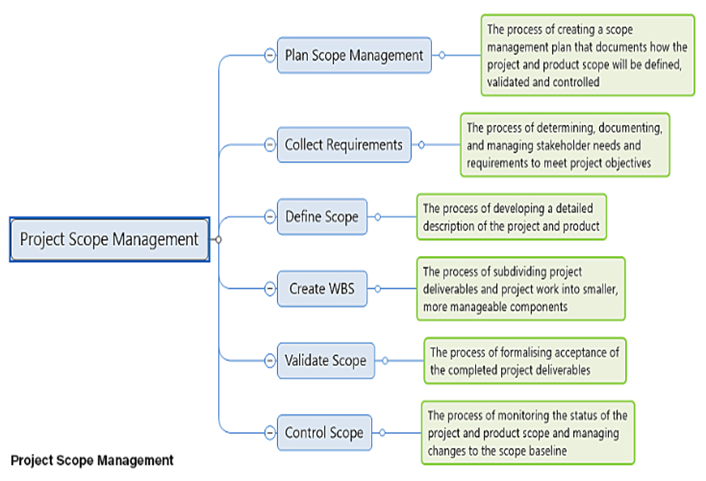
Figure 1: Project scope management process for user expectations
(Source: globalknowledge, 2020)
KPIs
In order to fulfil customer requirements, it is necessary to set “key performance indicators (KPIs)”. Project managers may monitor development and guarantee stakeholder satisfaction by selecting indicators that correspond to user expectations and establishing quantifiable objectives for project performance (McCance et al., 2020). Consistently comparing results to KPIs enables early detection of any discrepancies and the implementation of remedial measures.
Maximise Happiness of Customers
Set up a system for receiving comments from users so that their input may be included in the final product. Within 6 months of the project’s completion, get a customer satisfaction score of 90% or above on post-project surveys.
Complete Tasks on Time
Accomplish all planned steps and provide all promised results by the due dates. Using the program to monitor progress, make it a goal to meet 95% of the project’s milestones on time while proactively addressing any delays (Ciric Lalic et al., 2022).
Project Phases for Implementation and Tools
Implementation phases
Dynamic settings: It is crucial to adhere to the mutually agreed-up processes and criteria outlined in the project plan, especially in addition to the project’s management approaches (Xu and Zou, 2021). In dynamic settings, however, when conditions and objectives are always shifting, adaptability is as crucial.
Keeping up with user expectations: The most difficult part of any undertaking, particularly in the modern day, may be dealing with people. Managers of projects need to maintain morale by recognizing team members for their efforts and pushing them to improve (Noteboom et al., 2021). Leaders in the “project management office (PMO)” should encourage teams to use whichever processes and procedures work best for them, whether that’s the classic waterfall technique, “agile project execution”, or a blend of the two.
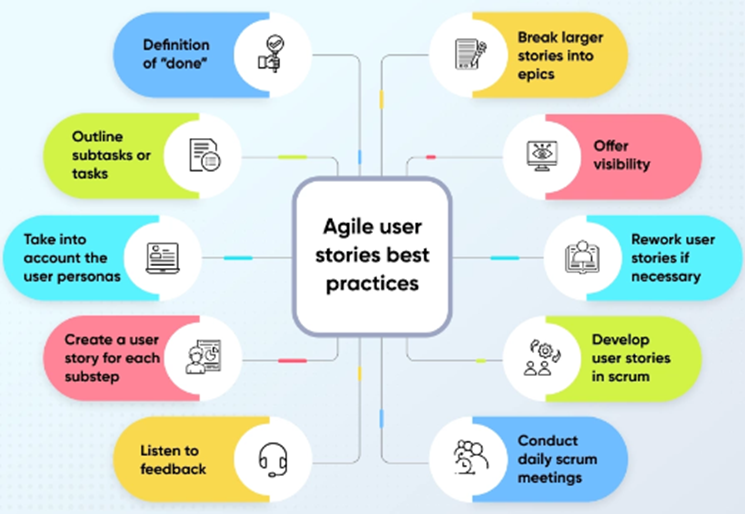
Figure 2: Agile project management
(Source: netsolutions, 2023)
Sharing knowledge: Consistent dialogue between teams, stakeholders, and clients is essential. Building trust and identifying problems both benefit from open communication. Collaborative effort is required to determine what, how, and how often to communicate with all project stakeholders.
Tools and software
- Freedcamp
- Asana
- Hive
- ClickUp
- Scoro
- Wrike
- Trello
Benefits
- When user expectations are met, user satisfaction improves, good connections are fostered, and the possibility of repeat business is boosted.
- The chance of a project being successful and producing good results is increased when those results are aligned with the expectations of the users.
- The successful completion of a project is directly correlated to the level of participation and cooperation shown by its many stakeholders (Copola Azenha et al., 2021).
- Meeting the expectations of consumers on regular schedules generates a favorable brand reputation, which in turn attracts new users as well as fosters confidence plus loyalty among existing users.
Limitations
- User discontent might result from confusion over requirements, especially if those needs are ever-evolving (Gasemagha and Kowang, 2021).
- The capacity to completely satisfy user expectations can get constrained by scarce resources especially funding and experienced employees.
- Achieving user expectations might be hampered by misunderstandings, competing priorities, and differing viewpoints among stakeholders.
Conclusion
It can be concluded that SMART goals take on an especially important role in project management, as teams and corporations employ projects to make their goals a reality. Customers want to know why they should put in the effort to acquire new knowledge or raise concerns. They are curious as to why some features were omitted from the offering. Project managers must be aware of these constraints and work to overcome them by careful preparation, clear communication, and careful management of potential threats. Stakeholder assessment approaches aid in setting user expectations by identifying key stakeholders and the impact they will have on the project. Project managers may better communicate with and manage stakeholders if they take the time to understand their needs, priorities, and potential conflicts. By doing so, they may lessen the effect of these constraints and boost the possibility of project management success in achieving user expectations. Human interaction may be the most challenging aspect of any endeavour, especially in the current day. Managers of projects should keep morale up by both praising and challenging their teams. When the outcomes of a project match the expectations of its end users, the project has a greater likelihood of success.
Reference
Ciric Lalic, D., Lalic, B., Delić, M., Gracanin, D. and Stefanovic, D., 2022. How project management approach impact project success? From traditional to agile. International Journal of Managing Projects in Business, 15(3), pp.494-521. https://www.researchgate.net/profile/Danijela-Ciric/publication/358619333_How_project_management_approach_impact_project_success_From_traditional_to_agile/links/6458ceaa97449a0e1a87001a/How-project-management-approach-impact-project-success-From-traditional-to-agile.pdf
Copola Azenha, F., Aparecida Reis, D. and Leme Fleury, A., 2021. The role and characteristics of hybrid approaches to project management in the development of technology-based products and services. Project Management Journal, 52(1), pp.90-110. https://cyberleninka.ru/article/n/advantages-and-disadvantages-of-construction-industries
Gasemagha, A.A. and Kowang, T.O., 2021. Project manager role in project management success. International Journal of Academic Research in Business and Social Sciences, 11(13), pp.1345-1355. http://eprints.utm.my/id/eprint/96768/1/TanOweeKowang2021_ProjectManagerRoleinProjectManagementSuccess.pdf
Karlsen, J.T. and Berg, M.E., 2020. A study of the influence of project managers’ signature strengths on project team resilience. Team Performance Management: An International Journal, 26(3/4), pp.247-262. https://www.researchgate.net/profile/Jan-Karlsen-5/publication/341710506_A_study_of_the_influence_of_project_managers’_signature_strengths_on_project_team_resilience/links/5f3117f4299bf13404b420e4/A-study-of-the-influence-of-project-managers-signature-strengths-on-project-team-resilience.pdf
McCance, T., Dickson, C.A., Daly, L., Boomer, C.A., Brown, D., Lynch, B., MacArthur, J., Mountain, K. and McCormack, B., 2020. Implementing person‐centred key performance indicators to strengthen leadership in community nursing: A feasibility study. Journal of Nursing Management, 28(6), pp.1443-1452. https://onlinelibrary.wiley.com/doi/pdf/10.1111/jonm.13107
Moradi, S., Kähkönen, K. and Aaltonen, K., 2020. Comparison of research and industry views on project managers’ competencies. International journal of managing projects in business, 13(3), pp.543-572. https://oulurepo.oulu.fi/bitstream/handle/10024/26360/nbnfi-fe2020120499461.pdf?sequence=1&isAllowed=y
Muntean, A., 2020. SMART projects to develop young learners’ competences in EFL. In Relevanța și calitatea formării universitare: competențe pentru prezent și viitor. Vol. I (pp. 221-227). Biblioteca Ştiinţifică a Universităţii de Stat Alecu Russo. https://ibn.idsi.md/sites/default/files/imag_file/221-227_7.pdf
Nenonen, S. and Storbacka, K., 2020. Don’t adapt, shape! Use the crisis to shape your minimum viable system–And the wider market. Industrial Marketing Management, 88, pp.265-271. https://www.ncbi.nlm.nih.gov/pmc/articles/PMC7264037/
Noteboom, C., Ofori, M., Sutrave, K. and El-Gayar, O., 2021. Agile project management: A systematic literature review of adoption drivers and critical success factors. https://scholarspace.manoa.hawaii.edu/bitstream/10125/71434/1/0662.pdf
Smith, P.G. and Merritt, G.M., 2020. Proactive risk management: Controlling uncertainty in product development. CRC Press. https://questionnaire.app.co.id/portal.nsf/7071d3d6f7f1af93472571b60034412b/c9292c58d0ac76c947256c60003ce5d9/$FILE/Proactive%20Risk%20Management.pdf
Xu, X. and Zou, P.X., 2021. System dynamics analytical modeling approach for construction project management research: A critical review and future directions. Frontiers of Engineering Management, 8(1), pp.17-31. https://journal.hep.com.cn/fem/EN/article/downloadArticleFile.do?attachType=PDF&id=26494