

Introduction to professional courses

An education type called a professional course is one that has been adjusted to meet the needs of a specific industry. These courses put focus on, among other things, developing skills, advancing one’s career, and improving oneself. In addition to addressing and meeting the needs of individuals and employers, these were specifically developed to meet industry standards and help in online assignment help Luton. Industry-specific entry requirements exist. For entry into a particular industry or profession, many professional course credentials are needed. These programs can be full- or part-time, with varying lengths of time.
Job seekers find it easier to find employment after completing any specialized courses due to their widespread acceptance in the industry. A college-level professional course is one that is targeted at students who are currently employed in, or soon to be employed in the corporate, governmental, or technological sectors (Reardon et al., 2021). If one is willing to develop one’s abilities in disciplines like team management, computer technology, and health and safety, think about enrolling in a professional course. Many colleges and universities offer specialized courses called professional courses that place a strong emphasis on professional development. These courses are tailored toward professionals who want to improve skills relevant to their particular work environment, unlike academic courses, which frequently do not require prerequisites and occasionally do not offer credits.
Introduction to vocational courses

Vocational education and dissertation writing service Luton is known as that particular training or course which equips the learners for working as tradesperson, technicians or having other career options as per their learning preferences and own interest and capabilities (TOI. 2023).
Vocational education or vocational courses are available throughout the world with a variety of career development option for students as it adds the learning option which directly implimented to prepare a person for a gainful employement with the effective skills and knowledge. On the basis of the country or states, vocational course can be referred through various names and identity. Here the apprenticeship system can also be considered to be influenced by the vocation education which also occurs at the higher education and post secondary educational levels (Scholten and Tieben. 2017). At the post-secondary level, there are various options to gain knowledge about technicalities, art, digitalization, through the trainning that are provided by specialized technical school or institutions, trade institution, community schools or also some subject specific universities that not only provide trainning or prepare individuals for their career growth but also help them to get recruited by well-known organizations as per their speciality. There is no distinction between a career and a vocation. Teaching procedural essay typer UK knowledge could be a category for vocational education. Declarative knowledge, which is used in education in a general wider range of scientific fields with a focus on the theory and abstract conceptual knowledge that is contrasted with this and is typical of tertiary education. Interacting with the apprenticeship system, vocational training can also be approved by various institutions at both of their available secondary or postsecondary level. Here it has also been observed that vocational training is at the increasingly prefered training options by number of students interms of its prior-learning ranges, recognition and academic credit and following benefits. However, it is infrequently thought to meet the traditional definition of higher education in its own right. Students can gain practical experience in their chosen career path through vocational education and training before graduating. Learners who can successfully complete these vocational courses and attend every program as per their interest area can get the credentials along with the certificate which adds an extra positive point towards their career path establishment.
Different examples of professional courses

Professional certifications granted by an acknowledged industry body are necessary for some professions, such as law and accounting, and they can also give learners the knowledge and skills they need to advance in their chosen fields or even change course (Higginbotham. 2023). Professional courses have been observed to be accredited and also regulated by the suitable existing professional bodies, and they are created to guarantee that all individuals hired for a given job meet the minimal standards of professional expertise.
Association of Chartered Certified Accountants (ACCA) course: Association of Certified Public Accountants. This international accounting organization, established in 1904, grants “Certified Chartered Accountant” certification (CollegeSearch. 2023). ACCA course length varies depending on the student’s educational background. The ACCA course lasts 3 years for students who have completed their 12th grade, 2-2.5 years for graduates in commerce, 2 years for IPCC groups, and 1 year for BCom and CA graduates (Liu, and Long, 2022).

According to the ACCA eligibility requirements, a student must be at least 18 years old, have completed the 10+2 program, have an overall score of 65% in mathematics/accounting and English, and have an overall score of at least 50% in all other subjects. Alongside graduation, students pursuing BCom, BMS, BBA, and other business- or commerce-related disciplines can also apply for the ACCA course. With 200 000 members in 181 nations, ACCA is a professional credential that is widely recognized (CollegeSearch. 2023). The ACCA qualification has also received recognition from thousands of employers around the world. Consequently, it ranks as one of the top professional accounting certifications available worldwide.
Chartered Institute of Personnel and Development (CIPD) course: The organization responsible for developing HR and people is called the Chartered Institute of Personnel and Development (CIPD). The CIPD is dedicated to promoting better working conditions and working conditions in general, developing HR capabilities, forming ideologies, and establishing best practice standards (Gold et al., 2017). With 140,000 members worldwide, CIPD has been the gold standard for HR and L&D excellence for more than a century (Teachmint. 2022). A person can further their HR career with the help of the CIPD Advanced Diploma in Strategic People Management. One will gain a broader understanding of the organizational issues that HR must deal with, be better equipped to assess the efficacy of HR models and practices, and develop better planning, analytical, and problem-solving skills (Walcott, 2021).
Royal Institution of Chartered Surveyors (RICS) course: An organization that upholds standards for valuing, managing, and developing various types of real estate and property established the Royal Institution of Chartered Surveyors (RICS) course, a professional training program available worldwide. Land, buildings, facilities, and infrastructure parts all qualify as property under the RICS. Six global regions outside of the United Kingdom, including offices in New York City, Brussels, and Dubai, are managed by the RICS, which has its global headquarters in London (Lemen, 2021). The RICS-established quality and ethical standards must be followed by the 134,000 accredited professionals who make up the organization’s roster . The more than 160 specialties represented by its members range from waste management and construction to valuation and accounting. The RICS leadership emphasizes corporate responsibility and ethical business practices as fundamental principles that underpin all of the organization’s policies and choices (Lemen, 2021). All students are expected to uphold these values and the standards established by the RICS bylaws and procedures, according to the organization.
Different examples of vocational courses

Vocational training programmes offer instruction and credentials pertaining to a particular profession, such as being a plumber, hairdresser, or professional chef. Many Further Education (FE) Colleges offer these courses. Most of the time, they are very hands-on and involve learning while doing real work for actual clients, like cutting hair in a public college salon, cooking in a college restaurant for actual clients, or installing bathrooms in the plumbing workshops.
Commercial pilot course: After completing the 12th grade, commercial pilot training is one of the most popular vocational programmes. Before receiving a Commercial Pilot License, a student must complete a significant amount of practise and practical training (CPL) (Careerpilot. 2023). One must study and pass math and physics in class 12 through traditional exams or school-based open learning in order to enrol in a pilot vocational programme after graduation. The student advances through a series of hierarchical levels, beginning with a student pilot licence that requires a physical fitness certificate as well as in-depth theoretical understanding of aviation meteorology and air regulations. Then, in addition to solo flights, he must train with an experienced pilot for a private pilot’s licence (PPL).
Animation designing course: The animation and gaming industries are expected to expand further as technology advances due to the rising demand for content that requires 2D/3D animation (Tian, 2021).
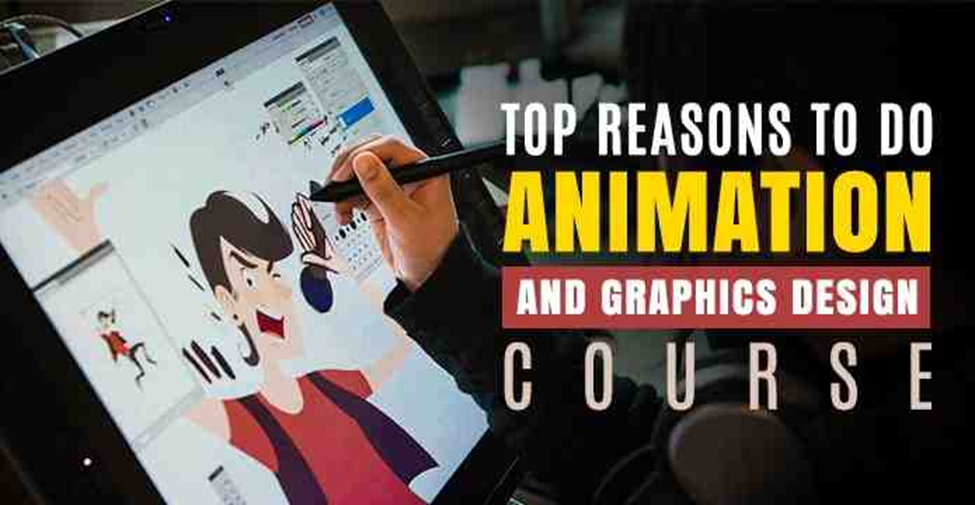
Animation and gaming require proficiency with computer programmes that create high-quality graphics and movements. Digital design is the way to go for someone who truly appreciates the dynamics of an animated character or wants to fully explore the depths of the gaming industry. For someone who is thinking about taking vocational courses after their 12th grade education, there is a growing need for animators in the market.
Foreign language courses: The demand for foreign language experts is growing as a result of market globalisation and the emergence of MNCs around the world. MNCs need the assistance of linguists to translate terms and policies when working with people from various nationalities (Yau et al., 2020). By using the local language of a nation, these linguists can also be useful in company/product marketing. Numerous institutions offer foreign language courses for six months, a year, or even longer if they teach multiple languages.
Digital marketing course: Digital marketing has a wide range of subfields in which to specialise and establish a career, from SEO and social media marketing to web design and analytics (Tuten, and Solomon, 2018). Additionally, one can find certificate and diploma programmes in some of the various forms of digital marketing, such as content creation, SEO specialisation, digital media, and public relations.
Banking and finance course: After graduating from high school, one can choose from a variety of short-term courses in banking and finance. These courses can be taken after high school or after graduation and last anywhere from one to four years. CISSP, Certified Financial Planner, Financial Modeling, etc. are a few of the courses (Schirf, and Serapiglia, 2017.). After completing, one has two options: either continue their education in a postgraduate programme or begin their career with this vocational course.
Difference between professional and vocational courses

The work or job that a person does to support himself and his family can be described in a wide variety of ways. They consist of terms like employment, job, profession, vocation, occupation, and so forth. Given that they have similar meanings and are frequently used interchangeably, people continue to have trouble differentiating between vocation and profession. There are differences between vocation and profession, despite their many similarities and areas of overlap.
Difference in terms and specialization: Although both vocation and profession denote the career or occupation through which a person earns a living, vocation is a more inclusive term than profession (Differencebetween. 2013). A person’s profession is the chosen career for which they receive in-depth training and specialised skills in order to be qualified for employment in that field. Vocation is a term used to describe a profession for which a person has received a calling from God. Vocation includes both the profession or occupation that a person pursues for a living and the occupation for which he is called by God. Unlike vocation, which is a person’s innate aptitude for a particular occupation, profession requires education and training.
Difference in implications in current day: A vocation today is an occupation for which a person has specialised skills or has received the necessary training. Vocational courses are those types of courses that have practical skills where one can learn the skills to develop expertise in a particular skill of one’s choice, according to observations made to help understand the distinction between vocational and professional courses. As certificate level programmes, they are also known. One can enrol in and complete a professional course with a degree, such as a B.Tech or a B.Com, in these cases. B.Voc, or Bachelor of Vocational Education, is another course that enables students to gain both qualifications and skills (Enlightio. 2022).
Difference with examples and application in career build-up: Any occupation, such as a plumber or mechanic, can be considered a profession. Because professions typically require formal education and training, they take a long time, a lot of effort, and a lot of money to acquire. In any profession, one can earn a respectable living, but getting there takes time and effort. Ones life’s purpose is what one does for a living. One’s daily motivation, inspiration, and drive are all derived from it. It’s not just something one can do to help with the bills; it’s something that makes one eager to get out of bed in the morning and go to work because it brings out the best and beneficial to people. .
Training and certification: Professions are frequently linked to occupations that demand more formal education, training, and certification than do vocations. It is common for professions to require a doctorate or at least a four-year degree. A vocation, in contrast, is a job that needs less formal training than a profession. Typically lasting a year or less, a vocational training programme is shorter than professional training. Technical and community colleges as well as apprenticeship programmes may provide vocational training.
Summary
In spite of the fact that the definitions of profession and vocation are quite similar, there is a small but significant difference between the two terms, it can be concluded after reading this blog. To deliver a service that is in demand, a profession needs specialised education and training. A vocation, on the other hand, doesn’t need as much formal education and may be based more on a personal calling or passion. Both professions and vocations can lead to extremely fulfilling careers, but in order to choose the right one for oneself, it’s crucial to know the difference between the two.
Reference
Admin (2013) Difference between vocation and profession, Compare the Difference Between Similar Terms. Differencebetween.com. Available at: https://www.differencebetween.com/difference-between-vocation-and-vs-profession/#:~:text=Though%20both%20vocation%2C%20as%20well,a%20broader%20term%20than%20profession.&text=
Profession%20refers%20to%20the%20career,for%20a%20job%20in%20it. (Accessed: February 3, 2023).
Enlightio. (2022) Profession vs. vocation: What’s the difference?, Enlightio. Available at: https://enlightio.com/profession-vs-vocation-what-is-the-difference (Accessed: February 3, 2023).
Gold, J., Holden, R. and Iles, P., 2017. Human resource development: Theory and practice. Bloomsbury Publishing. https://books.google.com/books?hl=en&lr=&id=6SFHEAAAQBAJ&oi=fnd&pg=PR1&dq=Chartered+Institute+of+Personnel+and+Development+(CIPD)+course&ots=AtvT8kT9_T&sig=fjGptA9fVVthYs1uT_DhsPv33ck
Higginbotham, W.by D. (2023) Professional qualifications, Prospects.ac.uk. Available at: https://www.prospects.ac.uk/postgraduate-study/professional-qualifications (Accessed: February 3, 2023).
Lemen, J., 2021. How to become a Chartered Surveyor. Routledge. https://www.taylorfrancis.com/books/mono/10.1201/9781003156673/become-chartered-surveyor-jen-lemen
Liu, H. and Long, W., 2022, October. Cloud Center Platform Integrating Industry-University Cooperation Mechanism of ACCA-Oriented Class-Running Data Analysis Algorithm. In 2022 International Conference on Edge Computing and Applications (ICECAA) (pp. 180-184). IEEE. https://ieeexplore.ieee.org/abstract/document/9936442/
Reardon, R.C., Peace, C.S. and Burbrink, I.E., 2021. College career courses and instructional research from 1976 through 2019. Scholarship of Teaching and Learning in Psychology. https://psycnet.apa.org/record/2021-31509-001
Schirf, E. and Serapiglia, A., 2017. Identifying the real technology skills gap: A qualitative look across disciplines. Information Systems Education Journal, 15(6), p.72. https://isedj.org/2017-15/n6/ISEDJv15n6p72.html
Scholten, M. and Tieben, N., 2017. Vocational qualification as safety-net? Education-to-work transitions of higher education dropouts in Germany. Empirical Research in Vocational Education and Training, 9, pp.1-17. https://link.springer.com/article/10.1186/s40461-017-0050-7
Teachmint@wp (2022) Professional course – meaning and definition, Teachmint. Available at: https://www.teachmint.com/glossary/p/professional-course/ (Accessed: February 3, 2023).
Tian, L., 2021. On the teaching reform of animation design major in higher vocational colleges. Journal of Frontiers in Art Research, 1(5), pp.45-48. https://clausiuspress.com/assets/default/article/2021/11/24/article_1637760533.pdf
TOI-Online. (2023) Are vocational courses better than degree courses?: – times of India, The Times of India. TOI. Available at: https://timesofindia.indiatimes.com/education/online-schooling/are-vocational-courses-better-than-degree-courses/articleshow/94152436.cms (Accessed: February 3, 2023).
Tuten, T.L. and Solomon, M.R., 2017. Social media marketing. Sage. https://papers.ssrn.com/sol3/papers.cfm?abstract_id=3545505
Walcott, K. (2021) Definition of professional courses, The Classroom | Empowering Students in Their College Journey. Available at: https://www.theclassroom.com/definition-professional-courses-7919214.html (Accessed: February 3, 2023).
What are vocational qualifications and where do they lead (2023) Careerpilot. Available at: https://www.careerpilot.org.uk/parent-zone/all-questions/what-are-vocational-qualifications-and-where-do-they-lead#:~:text=Vocational%20courses%20provide%20training%20and,Further%20Education%20(FE)%20Colleges. (Accessed: February 3, 2023).
What is Acca? full form, course details, subjects, certificate, jobs, and salary (2023) CollegeSearch. Available at: https://www.collegesearch.in/articles/association-of-chartered-certified-accountants-acca (Accessed: February 3, 2023).
Yau, T.S.H., Chun, D.W.S. and Chan, S.W.M., 2020. Curriculum Transition in Vocational English: A Case of the Hong Kong Vocational and Professional Education and Training Pathway. Taiwan International ESP Journal, 11(2), pp.20-34. https://www.airitilibrary.com/Publication/alDetailedMesh?docid=20797761-202012-202012250001-202012250001-20-34