
Introduction
The advent of AI is a watershed moment in the history of technology developed by humans. People can no longer separate themselves from artificial intelligence (typically considered the apex of computational science), which has moved well beyond its foundational computer science origins. This article digs into the many facets of AI’s potential and examines its far-reaching consequences in a variety of fields. The amazing transformations in industries, smarter cities, more customized user experiences, and groundbreaking scientific discoveries are all made possible by AI’s ongoing development and demonstration of hitherto unseen capabilities.
Discussion
Industrial Transformation by using AI
Healthcare: Deep learning-based AI in healthcare also has applications in natural language processing-based voice recognition. Unless properly interpreted, the outcomes of a deep learning model might be difficult to distinguish since the features included in the algorithm have little relevance to human observers (Reddy et al., 2020). Moreover, updating the rules might be tedious and time-consuming if the knowledge domain undergoes substantial change. Systems based on rules are being phased out in favor of data interpretation utilizing unique healthcare algorithms, which is where the use of machine learning comes in.
Manufacturing: To better analyze data and make decisions, manufacturers are increasingly turning to artificial intelligence (AI) technologies like machine learning (ML) as well as deep understanding neural networks (neural networks). As a result, production processes experience less costly downtime (Arinez et al., 2020). The cobots used in automobile assembly lines, for instance, are able to lift and hold heavy vehicle pieces in position while the human workers bolt them down. Warehouses are no match for a cobot’s ability to navigate and collect goods.

Figure 1: Cobots as a new coworker
(Source: universal-robots, 2023)
Finance: AI has the potential to streamline operations, perform tasks independently and responsibly, and improve decisions and service provision. By continually monitoring and analysing network traffic, for instance, AI may assist a payment provider in automating certain parts of cybersecurity (Lin, 2019). Alternatively, it may improve a bank’s customer-centric focus by allowing for more customised digital banking services that can respond to customers’ demands in a timely and safe manner.
Personal Advancements
Education
- Students may soon be able to utilise chatbots and other AI-powered educational tools. Students using iPads or computers may now have conversations with bots programmed to teach them things like algebra and comprehension of literature.
- In virtual reality, users are immersed in a computer-generated, three-dimensional world. VR teachers are reimagining what it takes to be a learner by bringing first-hand experiences to the classroom (Chen et al., 2022). Virtual reality is an amazing tool for making kids feel more united. Students in various classes may securely converse with one another by sharing a single VR experience.
- The implementation of LMSs is one example of such progress. A “learning management system (LMS)” is a streamlined, user-friendly platform where a school can oversee all of its online endeavors.
Marketing
- AI-enabled social marketing boosts productivity by enabling advanced forms of social listening never before possible. To speed up the process of discovering crucial audience information, Sprout’s forthcoming Queries with AI Assist tool will employ OpenAI’s GPT model to provide a wide variety of recommended phrases to add to the monitoring process (Vlačić et al., 2021).
- Successful nurturing programs may also benefit from AI-generated concepts. They provide guidance in developing engaging communications with prospects throughout the sales cycle.
- It saves time and allows people to reach the company’s objectives by automatically sorting and scheduling the messages and posts for maximum effect.
Entertainment
- Companies like Netflix along with ‘Amazon Prime Video employ AI algorithms to provide consumers with recommendations according to their watching habits and interests. Data-driven predictions of a film’s box office performance prior to its release are now possible thanks to AI algorithms (Steck et al., 2021). Cinelytic, an artificial intelligence program, was utilized by Warner Bros. to forecast the financial success of their films.
- In the entertainment sector, artificial intelligence-powered chatbots as well as artificially intelligent assistants are used to respond to client enquiries and provide assistance. StubHub, for one, employs a chatbot to facilitate the ticket-buying process.
- In order to make games more interesting and engaging, developers are turning to artificial intelligence algorithms. Using artificial intelligence, games like “AI Dungeon” may create their own unique storylines and settings.
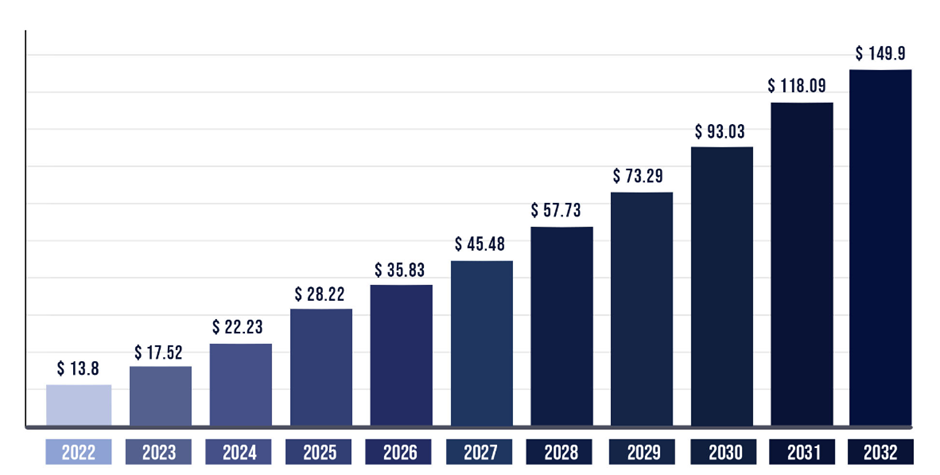
Figure 2: Future market size of the entertainment industry for using AI
(Source: visionresearchreports, 2023)
Smart cities
Police in “smart cities” utilise license plate readers to check vehicle data versus criminal databases, which may reveal things like stolen vehicles, expired registrations, plus more. Leonardo, a manufacturer, claims that its automated LPRs can scan 1,800 licence plates per minute over four paths of traffic when mounted to the underside of police vehicles. The police are alerted relatively immediately if a plate is reported for an infraction. To better prepare for potential dangers, cities might collect statistics on accidents or select other characteristics to monitor (Allam & Dhunny, 2019). With the use of AI, intelligent towns can monitor their impact on local ecology, temperature rise, and pollution levels. Governments and cities can make more environmentally friendly choices with the aid of machine learning and artificial intelligence when it comes to reducing pollution and optimizing energy use.
Social and Ethical Perspective
- Privacy and surveillance, discrimination or prejudice, and the possible philosophical issue of how to handle human judgment are only some of the statutory and ethical challenges that society faces as a result of AI.
- The adoption of new digital technology has raised fresh worries about the proliferation of inaccuracies and security breaches (John-Mathews, 2022). In the healthcare industry, mistakes in process or protocol may have disastrous effects on the patient. It is essential to keep in mind that patients often interact with doctors at their most vulnerable.
- Regulators have not yet adequately addressed the potential legal and ethical concerns raised by the widespread use of AI in healthcare settings.
- As AI is increasingly used in high-stakes contexts, the need for responsible, egalitarian, and accessible AI design-related governance has grown in importance.
- Transparency is most effective when information is both easily available and easy to understand (Zhuo et al., 2023). Algorithms’ implementation details are often hidden or otherwise made inaccessible on purpose.
Challenges
- The quality and availability of data provide two of the biggest obstacles for firms looking to use AI technologies. In order to learn and produce reliable predictions, AI systems need access to massive volumes of high-quality data (Gerke et al., 2020). Systems powered by AI may be effective, but many firms have challenges with data accessibility and quality.
- Even though there are many industries where AI may serve as a replacement for antiquated methods, it has yet to catch on. The lack of AI expertise is the true obstacle. Only a small subset of the population recognizes the promise of AI; this includes mostly tech enthusiasts, students, and academics.
- This is a major obstacle to the development of AI, and it has kept scientists and developers working on AI services for companies and new companies on their toes. These businesses may claim an accuracy rate of 90% or more, yet in every case, human beings may do better (Sun & Medaglia, 2019). The human can forecast the right output with a staggering 99% accuracy, cleaning up every time.
- It may be rather costly for firms, particularly smaller and medium-sized ones, to develop and adopt AI solutions. Some companies may have trouble seeing a return on investment due to the high price tag of technology, software, and employees.
Future Recommendations
- Recognizing a problem’s existence is the first step toward finding a solution. Artificial intelligence poses an irrefutable threat to future employment and personal privacy, according to EIU (Dwivedi et al., 2021). There is no time for resignation or complacency in the face of this truth.
- The report recommends prioritizing professional training, which has been neglected in many nations, along with the “STEM (science, technology, engineering, and mathematics)” topics and humanities courses, the significance of which is expected to rise due to a projected spike in the need for soft skills like teambuilding, partnership, and critical thought.
- The Recommendation is based on the promotion of basic concepts like openness and justice while keeping in mind the significance of human supervision of AI systems to ensure the preservation of basic freedoms and dignity.
Conclusion
AI has the ability to automate repetitive jobs, increase productivity, and enhance decision making and service delivery. AI-enabled social marketing increases output by facilitating sophisticated methods of social listening. Children may have a greater sense of community via the use of virtual reality. Sharing a same virtual reality experience allows students from different classrooms to safely exchange information and ideas with one another. Developers are increasingly relying on AI algorithms to increase the depth and breadth of their games. Intelligent cities can track environmental impacts like temperature increase and pollution thanks to AI. Predictive maintenance is often given as an example of how AI is being put to use in the industrial sector. Companies may better anticipate and avoid machine failure by using AI to data from the manufacturing process. Artificial intelligence (AI) and manufacturing go hand in hand since both humans and robots must collaborate closely in factory environments.
Reference
Allam, Z., & Dhunny, Z. A. (2019). On big data, artificial intelligence and smart cities. Cities, 89, 80-91. Retrieved from: https://www.academia.edu/download/87293333/j.cities.2019.01.03220220610-1-fwr47d.pdf [Retrieved on: 16.09.2023]
Arinez, J. F., Chang, Q., Gao, R. X., Xu, C., & Zhang, J. (2020). Artificial intelligence in advanced manufacturing: Current status and future outlook. Journal of Manufacturing Science and Engineering, 142(11), 110804. Retrieved from: https://asmedigitalcollection.asme.org/manufacturingscience/article-pdf/142/11/110804/6594922/manu_142_11_110804.pdf [Retrieved on: 16.09.2023]
Chen, L., Chen, P., & Lin, Z. (2020). Artificial intelligence in education: A review. Ieee Access, 8, 75264-75278. Retrieved from: https://ieeexplore.ieee.org/iel7/6287639/6514899/09069875.pdf [Retrieved on: 16.09.2023]
Dwivedi, Y. K., Hughes, L., Ismagilova, E., Aarts, G., Coombs, C., Crick, T., … & Williams, M. D. (2021). Artificial Intelligence (AI): Multidisciplinary perspectives on emerging challenges, opportunities, and agenda for research, practice and policy. International Journal of Information Management, 57, 101994. Retrieved from: https://uobrep.openrepository.com/bitstream/handle/10547/623613/1_s2.0_S026840121930917X_main.pdf?sequence=4 [Retrieved on: 16.09.2023]
Gerke, S., Minssen, T., & Cohen, G. (2020). Ethical and legal challenges of artificial intelligence-driven healthcare. In Artificial intelligence in healthcare (pp. 295-336). Academic Press. Retrieved from: https://www.ncbi.nlm.nih.gov/pmc/articles/PMC7332220/ [Retrieved on: 16.09.2023]
John-Mathews, J. M. (2022). Some critical and ethical perspectives on the empirical turn of AI interpretability. Technological Forecasting and Social Change, 174, 121209. Retrieved from: https://arxiv.org/pdf/2109.09586 [Retrieved on: 16.09.2023]
Lin, T. C. (2019). Artificial intelligence, finance, and the law. Fordham L. Rev., 88, 531. Retrieved from: https://ir.lawnet.fordham.edu/cgi/viewcontent.cgi?article=5630&context=flr [Retrieved on: 16.09.2023]
Reddy, S., Allan, S., Coghlan, S., & Cooper, P. (2020). A governance model for the application of AI in health care. Journal of the American Medical Informatics Association, 27(3), 491-497. Retrieved from: https://www.ncbi.nlm.nih.gov/pmc/articles/PMC7647243/ [Retrieved on: 16.09.2023]
Steck, H., Baltrunas, L., Elahi, E., Liang, D., Raimond, Y., & Basilico, J. (2021). Deep learning for recommender systems: A Netflix case study. AI Magazine, 42(3), 7-18. Retrieved from: https://ojs.aaai.org/aimagazine/index.php/aimagazine/article/view/18140/18876 [Retrieved on: 16.09.2023]
Sun, T. Q., & Medaglia, R. (2019). Mapping the challenges of Artificial Intelligence in the public sector: Evidence from public healthcare. Government Information Quarterly, 36(2), 368-383. Retrieved from: https://research.cbs.dk/files/58401014/rony_medaglia_et_al_mapping_the_challenges_acceptedmanuscript.pdf [Retrieved on: 16.09.2023]
Vlačić, B., Corbo, L., e Silva, S. C., & Dabić, M. (2021). The evolving role of artificial intelligence in marketing: A review and research agenda. Journal of Business Research, 128, 187-203. Retrieved from: https://irep.ntu.ac.uk/id/eprint/43027/1/1443959_Dabic.pdf [Retrieved on: 16.09.2023]
Zhuo, T. Y., Huang, Y., Chen, C., & Xing, Z. (2023). Exploring ai ethics of chatgpt: A diagnostic analysis. arXiv preprint arXiv:2301.12867. Retrieved from: https://arxiv.org/pdf/2301.12867 [Retrieved on: 16.09.2023]