

Introduction
This essay is based on details information about “Total Quality Management (TQM)” and its impact of it on customers. The goal of total quality management (TQM)” is to ensure that all aspects of the business are consistently high quality in order to keep customers happy. To improve client retention rates, TQM focuses on providing services that meet or exceed those of the competition. The strategy is meant to help write that essay businesses find a way to enhance their market share, improve productivity, keep improving customer satisfaction and loyalty improve employee performance and enhance processes, all of which require constant feedback from customers and employees to evaluate how products and services can be gotten better throughout the organization. TQM is a company-wide approach to quality management, while other methods tend to target individual divisions. The TQM concept holds that bettering processes across the board makes it simpler to provide superior goods and services to consumers. Using TQM, businesses can have their whole staff working toward the same goal: increasing customer retention and satisfaction. In the following sections there will be a discussion from the various perspective of TQM and real case study examples will be given to understand it better. In the end, there will be a conclusion on the basis of the topic.
A brief history of TQM
Worldwide recognition of the forerunner of TQM came in the late 1970s and early 1980s (TQM). The world looked to Japan as an example of how to produce high-quality services and goods at affordable prices, and their success paved the way for the subsequent great corporate strategy. Nations throughout the world looked to Japan for guidance and Online Dissertation Writing Service after seeing its economic success and came upon “Dr. W. Edwards Deming’s set of principles”. Improved product design, consistent quality of products, enhanced testing procedures, and increased worldwide market sales these ideas constitute the basis of total quality management.
Principles of TQM
TQM’s eight pillars provide a road map to superior support for their customers. The 8 Following guidelines, as defined by the “American Society for Quality (ASQ)”, are as follows:
Customer-focus:
The happiness of the consumer is the ultimate goal. Customer satisfaction is a key indicator of the success of any changes made (Jumady et al. 2021). If they are unhappy, they need to rethink the approach.
Complete participation of staff:
Each worker should have a personal stake in the company’s pursuit of constant advancement. Organization-wide support is necessary for TQM since it isn’t limited to just one division.
Process-centric:
Strategy development for TQM should be informed by the perspectives of both internal and external consumers.

Figure 1: Principles of TQM
(Source: juran, 2019)
Integrated system:
An effective TQM plan takes into account the interconnectedness of the many processes within an organization, from the smallest to the largest, and makes sure that all of these processes contribute to achieving the company’s overarching objectives (Saffar and Obeidat, 2020).
Methodical preparation and execution:
The TQM approach should be well-honed and centered on the leader’s objectives, purpose, and objectives if it wants to create a culture that is dedicated to constant continuous improvement.
Advancement in a steady, progressive manner:
The key concept of Total Quality Management is “constant improvement.” Because of the ongoing emergence of new business issues and technology, the company must never declare a method completed or finished.
“Fact-based decision making”:
The success of the TQM approach may be monitored and improved with the use of data and analytics (Ramchander, et al. 2021).
Communication:
To ensure the success of the TQM strategy, it is essential that it maintain open lines of communication with all levels of the business.
TMQ model
The PDCA Cycle, an integral part of Total Quality Management, consists of the following four steps: “plan, doing, check, and act”. In the “planning” phase, workers identify the origins of the company-wide difficulties and quality management concerns that require fixing (Abbas, 2020). The “doing” phase entails the creation of solutions to the issues identified even during the “planning” phase. The efficiency with which an individual’s ideas can be implemented to address an issue is evaluated. Comparing pre- and post-project data for an indication of success and quality gains constitutes the “checking” stage of a project’s life cycle (Antunes et al. 2021). The “acting” step is when these outcomes are recorded and people get prepared to address another problem inside the firm.
Impact on customer and their satisfaction
“Total quality management” requires workers to have a thorough knowledge of their consumers before making any adjustments to the methods and infrastructure used to produce their goods. In reality, the primary motivation for implementing TQM or any other kind of quality management would be to expand the business’s client base and improve the customer experience (Saragih et al. 2020). TQM boosts a company’s client base by attracting and retaining loyal customers. The term “customer satisfaction” refers to the “number of clients or percentage of all consumers whose assessed experiences with a business, its goods, or its operations (ratings),” both of which should be higher than the predetermined target. 71% of “senior marketing managers” surveyed said that measuring customer satisfaction is crucial to the success of their companies. A company’s internal culture may be profoundly influenced by customer satisfaction scores (Eklof et al. 2020). They remind workers how crucial it is to go above and beyond for clients. In addition, a drop in these ratings signals trouble that may impact productivity and revenue. These measurements provide a numerical form to a crucial dynamic and get Instant assignment help. Positive advertising, spread by satisfied consumers, is not only cost-free but also rather powerful, especially if the business in question has a devoted following. It is thus crucial for firms to efficiently manage client satisfaction. Companies can’t make improvements to customer service without accurate and comprehensive satisfaction surveys.

Figure 2: TQM and customers
(Source: researchgate.net, n.d)
The quality of a service or product is measured not only by its inherent qualities (such as its longevity, packaging, dependability, and so forth), but also from the customer’s perception of the company as a whole (Nugroho et al. 2022). Don’t forget that unhappy customers mean lost revenue. Employees inside the service business who treat their clients with common sense and the highest care and competence can count on having those customers return again and again. Create a selection of client comment cards so they may voice their opinions on the goods and services. The comments might be very helpful to the company, or they could be quite detrimental. Any consumer feedback, positive or negative, should be taken seriously (Gajewska et al. 2020). TQM calls for a centralized meeting space where staff may get together to discuss problems and develop workable solutions for meeting client needs. If the company disregards the customers, no level of TQM will help.
TQM leadership and its impact on customers
TQM is a managerial concept with a goal that encourages the active participation of all workers in order to promote customer satisfaction via the process of continuous improvement (Jumady, 2020). According to the proponents of TQM, the factors of leadership, personal respect, improvement, and administration with the facts determine the performance or failures of this approach.
Leaders chart the course and cast the vision for their organizations. Total quality operations stem from the direction set by upper management (Pambreni et al. 2019). Without the direction of upper management, it is difficult to enhance operational management (“process management, service design). It is estimated that 85% of quality assurance duties fall on the shoulders of upper management. It makes a leader is the effort put out repeatedly by a CEO to provide superior results (TASSANAEKJIT and AkKAWANITCHA, 2022). It has become clear that a lack of enthusiasm and dedication from upper leadership for TQM’s adoption may be a major contributor to the collapse of the process in a company.
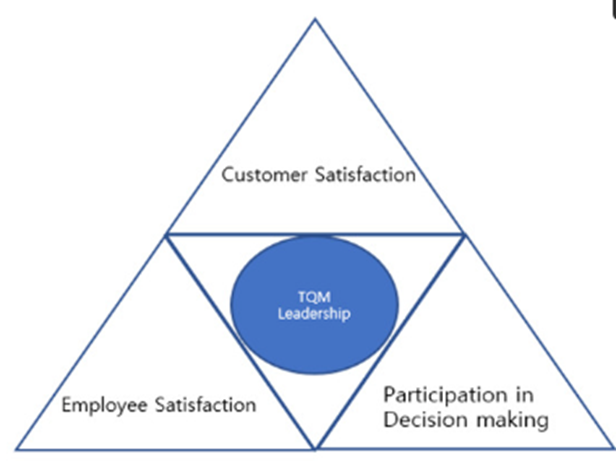
Figure 3: TQM Leadership and customers satisfaction
(Source: mdpi, 2020)
Another hallmark of quality leadership is a focus on both staff and customer happiness via quality innovation, as well as a willingness to incorporate staff feedback into important business decisions. Staff and client happiness are intertwined, and mutual respect is at the heart of both (Jimoh et al. 2019). Additionally, the sensitive areas of internal as well as external consumers may be addressed in an effort to achieve continual improvement.
Toyota case study
One of the main causes of the effectiveness of Toyota’s TQM implementation is indeed the company’s dedication to its customers, which in turn generates the necessary level of customer happiness. Every successful company needs clientele who are both loyal and dependable in order to thrive. Toyota’s production quality has improved the most recently in the area of customer happiness and concentration. TQM is often characterized by an organization-wide commitment to satisfying customers by anticipating their needs and going above and beyond what is expected. The goal of increasing and maintaining happy customers should naturally follow from an organization’s dedication to its customers. Therefore, this factor improves TQM implementation while making it a priority of manufacturing. Toyota puts its communities, workers, owners, customers, and purpose first. Various Liberty customer characteristics (Saad et al. 2020). During production, Toyota Corporation places a premium on care. TQM is based on three fundamental customer-centric viewpoints. The basis for these is a manufacturing method that dates to the 1950s. TQM adoption will only continue to be successful if it is based on sound methods for ensuring high-quality production, planning, and achievement. All employers and managers need to keep their focus on improving and maintaining quality via strategic planning throughout all times.
Disadvantages and recommendations for customers via TQM
Disadvantages
- The necessity for something and the difficulty of gaining company-wide dedication to quality management is among the major drawbacks of TQM.
- The failure of a TQM program will have far-reaching consequences for the business if it is not given enough time and money.
- Management will never be successful with a TQM program if it is only partially implemented and it affects customers (Liu et al. 2019).
- In order to successfully adopt TQM, training is necessary, but for smaller businesses, allocating time and money to training may be difficult.
Recommendations for improvement
- All personnel at TQM companies should get the appropriate training to help them do their jobs more effectively. When businesses invest in training programs and strive to enhance quality, they find success.
- Training workers to consistently turn out high-quality goods or services increases the value of their contributions throughout the manufacturing process. That’s why we expect to see an uptick in positive feedback from patrons and a decrease in negative feedback.
- The first stage of production for a company’s goods or services is the acquisition of inputs through suppliers. Services and products are only as good as the quality of their inputs (Kaur et al. 2019). To this end, it is important that suppliers implement TQM and take part in these efforts. Providers may embrace quality control and speedily ship consistent, elevated goods and services with the help of efficient supply procedures.
Conclusion
It can be concluded that the goal of TQM is to ensure that customers get services that are at least as good as those offered by rival companies. The strategy’s goal is to assist organizations to expand their market share, profitability, customer happiness, loyalty, and performance assessment, and includes altering via the use of continuous feedback from consumers and workers on how goods and services may be improved across the board. The satisfaction of the buyer is the primary objective. One of the best ways to gauge the efficacy of the adjustments is by surveying the customers’ level of happiness. Changing tactics may be necessary if their satisfaction levels are low. Keeping an open dialogue with employees throughout all of the company’s levels is crucial to the achievement of the TQM goals. Those that are employed in the service industry and treat their customers with common sense, the utmost care, and skill may expect their customers to return again and again. It is difficult to improve operational management without the guidance of senior management. It has become apparent that a key factor in the failure of TQM implementation inside an organization is a lack of support and commitment from top management. If a TQM program is not provided with sufficient resources, its failure will have far-reaching effects on the company. Employees’ contributions to the success of a business and its end users are enhanced when they have been given the tools and knowledge, they need to produce consistently high-quality products or services.
Reference
Abbas, J., 2020. Impact of total quality management on corporate sustainability through the mediating effect of knowledge management. Journal of Cleaner Production, 244, p.118806. https://e-tarjome.com/storage/panel/fileuploads/2019-11-26/1574756604_gh5.pdf
Antunes, M.G., Mucharreira, P.R., Justino, M.R.T. and Texeira-Quirós, J., 2021. Effects of Total Quality Management (TQM) dimensions on innovation—evidence from SMEs. Sustainability, 13(18), p.10095. https://www.mdpi.com/2071-1050/13/18/10095/pdf
Eklof, J., Podkorytova, O. and Malova, A., 2020. Linking customer satisfaction with financial performance: an empirical study of Scandinavian banks. Total Quality Management & Business Excellence, 31(15-16), pp.1684-1702. https://www.tandfonline.com/doi/pdf/10.1080/14783363.2018.1504621?needAccess&
Gajewska, T., Zimon, D., Kaczor, G. and Madzík, P., 2020. The impact of the level of customer satisfaction on the quality of e-commerce services. International Journal of Productivity and Performance Management, 69(4), pp.666-684. https://www.tandfonline.com/doi/abs/10.1080/19368623.2020.1722304
Jimoh, R., Oyewobi, L., Isa, R. and Waziri, I., 2019. Total quality management practices and organizational performance: the mediating roles of strategies for continuous improvement. International Journal of Construction Management, 19(2), pp.162-177. http://repository.futminna.edu.ng:8080/jspui/bitstream/123456789/534/1/Total%20quality%20manageme
%20practices%20and%20organizational%20performance%20the%20
mediating%20roles%20of%20strategies%20for%20continuous%20improvement%281%29.pdf
Jumady, E., 2020. Implementation of Total Quality Management and Leadership on Islamic Banking Financial Performance. ATESTASI: Jurnal Ilmiah Akuntansi, 3(2), pp.163-170. https://jurnal.feb-umi.id/index.php/ATESTASI/article/download/266/172
Jumady, E., Sugiarto, S. and Latief, F., 2021. Management performance analysis based on total quality management principles. Point Of View Research Management, 2(1), pp.10-18. http://journal.accountingpointofview.id/index.php/POVREMA/article/download/112/85
Kaur, M., Singh, K. and Singh, D., 2019. Synergetic success factors of total quality management (TQM) and supply chain management (SCM): A literature review. International Journal of Quality & Reliability Management. https://www.researchgate.net/profile/Mandeep-Kaur-19/publication/331338599_Synergetic_success_factors_of_total_quality_management_TQM_and_supply_chain_
Liu, H.C., Wang, L.E., You, X.Y. and Wu, S.M., 2019. Failure mode and effect analysis with extended grey relational analysis method in cloud setting. Total Quality Management & Business Excellence, 30(7-8), pp.745-767. https://www.mdpi.com/2199-8531/7/1/70/pdf
Nugroho, A., Christiananta, B., Wulani, F. and Pratama, I., 2022. Exploring the Association Among Just in Time, Total Quality and Supply Chain Management Influence on Firm Performance: Evidence from Indonesia. https://dspace.uc.ac.id/bitstream/handle/123456789/5333/Plagiarism5333.pdf?sequence=5&isAllowed=y
Pambreni, Y., Khatibi, A., Azam, S. and Tham, J.J.M.S.L., 2019. The influence of total quality management toward organization performance. Management Science Letters, 9(9), pp.1397-1406. http://m.growingscience.com/msl/Vol9/msl_2019_124.pdf
Ramchander, M. and Nadar, M.M., 2021. Using ISO 9001 Principles to Enhance Total Quality Management: A Case Study of a Packaging Manufacturer in South Africa. African Journal of Inter/Multidisciplinary Studies, 3(1), pp.118-130. https://journals.co.za/doi/pdf/10.51415/ajims.v3i1.902
Saad, N.H., Khalid, Q.M., Halim, N.H.A. and Khusaini, N.S., 2020. A case study: Framework of gap analysis on integration of audit system between IATF 16949 and Toyota production system. In Applied Mechanics and Materials (Vol. 899, pp. 219-229). Trans Tech Publications Ltd.
Saffar, N. and Obeidat, A., 2020. The effect of total quality management practices on employee performance: The moderating role of knowledge sharing. Management Science Letters, 10(1), pp.77-90. http://m.growingscience.com/msl/Vol10/msl_2019_227.pdf
Saragih, J., Tarigan, A., Pratama, I., Wardati, J. and Silalahi, E.F., 2020. The impact of total quality management, supply chain management practices and operations capability on firm performance. Polish Journal of Management Studies, 21(2), pp.384-397. https://bibliotekanauki.pl/articles/406107.pdf
TASSANAEKJIT, O. and AkKAWANITCHA, C.H.U.A.N.C.H.U.E.N., 2022. Effect of employee perception of transformational leadership, total quality management and knowledge sharing towards organizational effectiveness of a electronic components manufacturing company in Pathum Thani province (Doctoral dissertation, Silpakorn University).